




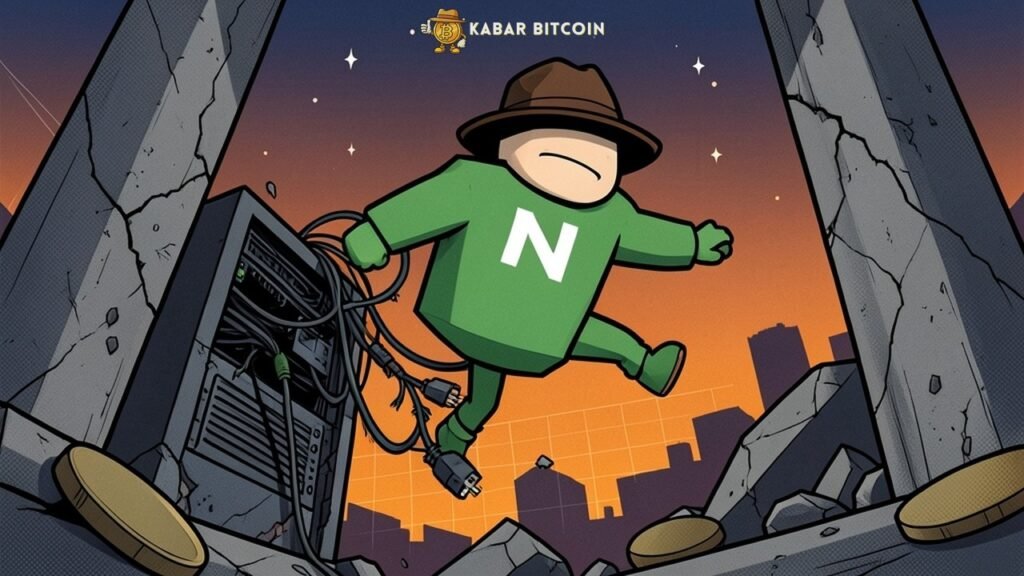

Near AI servers were breached following a security flaw in the inference software they used. The hacking incident exposed account information belonging to around 100 users, as well as operational data from 18 artificial intelligence agents. Attackers infiltrated the system by exploiting a vulnerability in SGLang, an open-source inference engine responsible for processing AI model prompts.
The security flaw targeted by the hackers was a Remote Code Execution (RCE) vulnerability. The weakness in the SGLang inference engine allowed attackers to execute command lines directly on the processing server. From the initial entry point on the inference server, attackers penetrated internal infrastructure connected to a legacy feature named Private Chat.
Compromised Accounts and AI Agents
The intrusion into internal infrastructure led to the theft of user and system data. A total of 100 customer accounts were confirmed exposed in this incident. The stolen information included full names, email addresses, subscription tiers, and account balance records for each user.
In addition to individual account data, attackers exfiltrated operational assets belonging to 18 AI agents deployed on the legacy infrastructure. The stolen files included interactive chat histories, agent configuration settings, and operational logs. Within those log records, two customer Cloud API keys were temporarily exposed before the security team acted to revoke them to prevent unauthorized use.
Why Didn’t TEE Privacy Features Protect the Agents?
The incident highlights how security systems operate at the infrastructure level. Near AI confirmed that the 18 compromised AI agents were not running inside Trusted Execution Environments (TEE). While the hardware-isolated computing environment is a flagship privacy feature of the platform, the legacy Private Chat system operated outside that protected boundary.
Near AI management stressed that hardware isolation like TEEs still has limitations. TEE protection cannot safeguard a system if the application or software running inside it contains security flaws. When inference software within the system suffers from code execution vulnerabilities, attackers can still inspect and hijack processes from within.
Feature Shutdown and Access Revocation
In response to the data breach, the development team took emergency measures by completely shutting down the legacy Private Chat service to sever the intrusion path. All active user sessions and administrative credentials were immediately revoked to prevent subsequent unauthorized access.
Technical remediation then focused on hardening the inference servers. The security team deployed software updates to patch the vulnerability in the SGLang engine across their computing clusters. For affected users, the incident underscores that AI agent data security depends not only on hardware encryption, but on the integrity of every software layer processing it.
Reported by Decrypt.
Also read: Keplr Suspends Google and Apple Logins After Private Key Leak - $6M Lost from 44,700 Wallets
Disclaimer: This article is for informational and educational purposes only, not financial advice. Cryptocurrency assets are highly volatile and carry significant risk. Always do your own research (DYOR) and never invest more than you can afford to lose.