



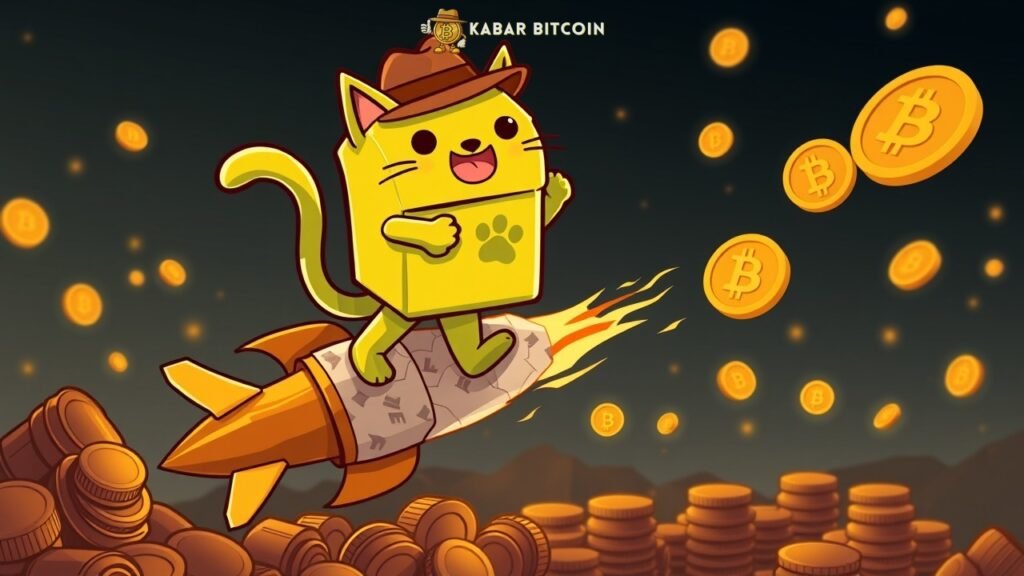

Total value locked on Robinhood Chain has reached $774 million, but most of this capital is not flowing into the network’s original purpose. Real-world tokenized assets, which were supposed to be Robinhood’s main focus, have gathered just $27.6 million. Instead, the spotlight has been stolen by a memecoin called CASHCAT, which continues to attract retail traders.
The token, which features Robinhood’s old logo, has surged 120% over the past week. Currently, CASHCAT is trading at $0.087 after recording a 22% daily gain. Its market capitalization has risen to reach $86 million, supported by a daily trading volume of $9 million. While this figure is still far from the token’s all-time high of $0.22 in mid-July, the momentum is strong enough to make company executives take notice and shift their views on memecoins.
Fan Fiction That Redirected the Network
CASHCAT is by no means an official product of the US-based company. The token was created entirely by third parties, utilizing a mascot of a cat holding money that Robinhood used before its rebranding. The project’s website itself honestly describes the token as “fan fiction with a ticker.” The rules of the project are also simple: the entire supply of 989 million tokens is already fully circulating in the market, with no special allocation locked for the team.
On-chain data shows that there are currently around 41,200 token holders. The ownership distribution is relatively even, as the largest holder is a Uniswap liquidity pool, which controls just 2.47% of the total supply. The explosion of CASHCAT has finally forced Robinhood CEO Vlad Tenev to change his tune. Tenev, who previously described crypto assets without utility as a “dead end,” responded to the trend with an open admission on social media, posting that the network has also turned out to be a good fit for the memecoin ecosystem.
What Happens After the Subsidy Stops?
Behind CASHCAT’s price rally, token launch activity across the network is actually slowing down. Daily token launches have dropped to around 10,000, shrinking sharply from a peak of 35,000 launches per day in the middle of last month. The ecosystem supporting token creators is also backing away. Launch platform Noxa stopped accepting new projects on July 11 and shut down its services two days later, after pocketing around $12 million in fees. Noxa is reportedly still holding $137,000 worth of CASHCAT in its wallet and has not sold it.
The true test for the longevity of Robinhood Chain and CASHCAT’s staying power has not yet arrived. Throughout the initial promotional launch period, Robinhood covered all gas fees for transactions running on its network. This subsidy has been the main reason traders have actively swapped tokens. The zero-fee program is scheduled to end around late September. Once the subsidy ends and memecoin players have to pay for their own transactions, only then can we assess whether CASHCAT’s popularity is truly solid or just a free ride.
As reported by CoinDesk.
Read also: How to Read Candlesticks for Beginners
Disclaimer: This article is for informational and educational purposes only, not financial advice. Cryptocurrency assets are highly volatile and carry significant risk. Always do your own research (DYOR) and never invest more than you can afford to lose.