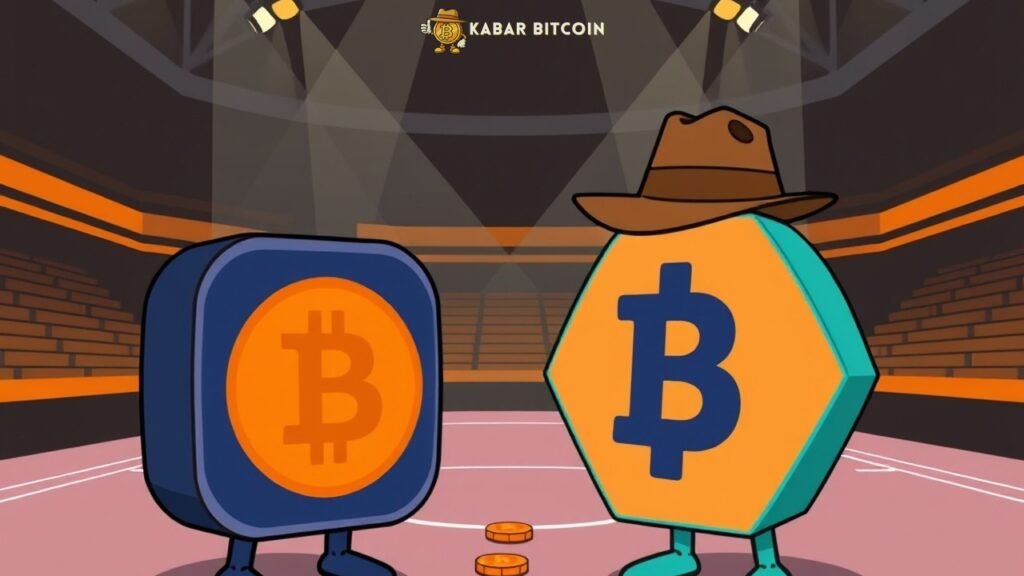






The year-long crypto social networking experiment has officially come to an end. Through an update listed on Google Play, the Brian Armstrong-led company dropped the “Base App” name and restored its widely recognized original identity: Coinbase Wallet.
This decision closes the chapter on an ambition pursued since July 2025. Under the Base App moniker, Coinbase sought to revamp its wallet into an all-in-one “everything app” centered around social networking interactions built on the Base Layer-2 network. However, user adoption failed to meet expectations. In March 2026, CEO Brian Armstrong acknowledged that their social experiment had not yielded results. The product’s stagnation led to a leadership shakeup, with Base creator Jesse Pollak stepping down as head of the app in July 2026. The role was handed to Jordan “Cobie” Fish, allowing Pollak to refocus entirely on Base’s core blockchain infrastructure.
Pivoting Into a Testing Ground
With its previous vision abandoned, Coinbase Wallet has undergone a comprehensive overhaul. The self-custodial application - where users retain control of their private keys - has been repackaged as a multichain trading hub. Its expanded offerings include perpetual contract trading, prediction markets, tokenized equities, transfer services, and yield-generating features. Traces of the previous era have not been completely eliminated: several social and messaging features remain active in the new version, operating alongside security mechanisms that automatically hide scam tokens from view.
The wallet’s primary role within the broader Coinbase ecosystem has also shifted. Coinbase Wallet Head of Product Ryan Kass stated that the app is now positioned as a sandbox or testing ground. The company utilizes it to introduce new financial products and assets that may not yet be listed or offered on its primary centralized exchange.
First Test with Hyperliquid
The concrete execution of this testbed strategy went live in August 2026 through an initial integration with the Hyperliquid protocol. Through this connection, wallet users gain direct access to more than 290 perpetual futures markets with leverage options of up to 50x. Users manage trade positions entirely through Coinbase’s interface, while order execution is handled by Hyperliquid’s engine.
This derivatives feature enforces strict geographical restrictions. The futures integration is unavailable to users residing in the United States, the United Kingdom, and Canada. For US customers, the company provides market access through a different, regulated route via Coinbase Financial Markets - a dedicated entity regulated by the Commodity Futures Trading Commission (CFTC) and a registered member of the National Futures Association (NFA).
Reported by crypto.news.
Also read: How to Read Candlesticks for Beginners
Also read: Binance Removes Pax Dollar from All Services - Not Due to Default
Disclaimer: This article is for informational and educational purposes only, not financial advice. Cryptocurrency assets are highly volatile and carry significant risk. Always do your own research (DYOR) and never invest more than you can afford to lose.