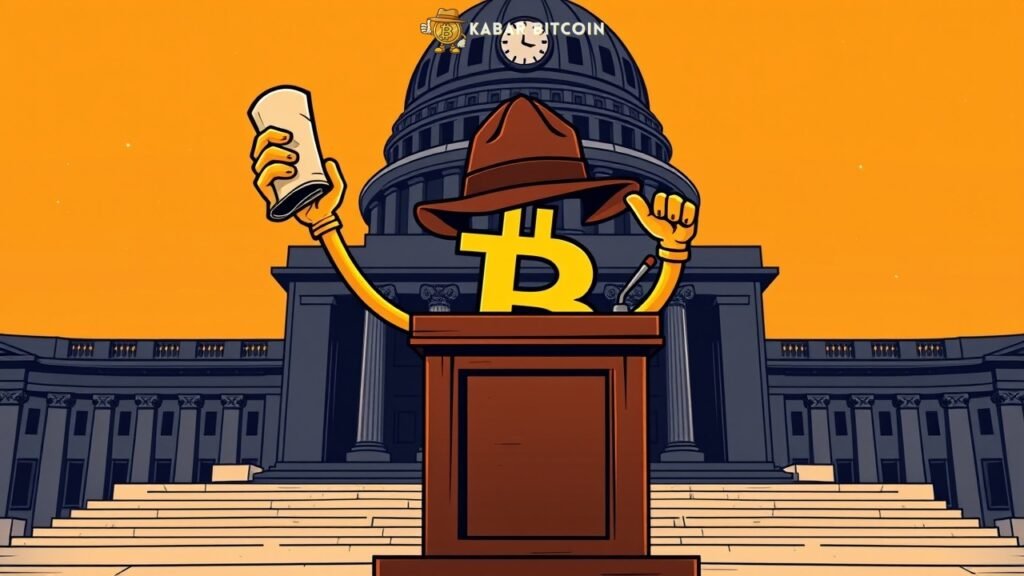






President Donald Trump has directly stepped in to pressure the US Senate to swiftly pass the CLARITY Act, a major bill regulating digital assets, framing his push around a politically compelling reason: honoring the late Senator Lindsey Graham. In a post on Truth Social, Trump described Graham - who passed away this weekend after a brief illness - as a staunch supporter of the bill and urged Congress to delay no longer.
In a separate post that went viral with thousands of likes, Trump raised the stakes by accusing China of seeking “full and total control” over crypto and artificial intelligence if America fails to move quickly. “The US must lead in digital assets and AI,” he asserted.
A 70-Page Draft Ready on the Table
Trump’s pressure comes just as momentum is heating up. Senate staff are scheduled to release a merged draft of the CLARITY Act this week, combining proposals from the Senate Banking and Agriculture Committees into a unified text that has expanded by more than 70 pages - including stronger consumer protections.
White House crypto advisor Patrick Witt highlighted this week as a crucial moment coinciding with the first anniversary of the GENIUS Act becoming law, stating that Congress can no longer afford to delay. Senator Cynthia Lummis also joined the push, recalling that Graham believed the US had to lead in digital assets, and urged the Senate to promptly pass the bill and send it to Trump’s desk.
Shadows of Conflict of Interest
However, the road ahead is not without friction. A group of Democratic senators - Elizabeth Warren, Richard Blumenthal, Gary Peters, Dick Durbin, and Ron Wyden - called on Congress to first hold a hearing on the national security implications of Trump’s personal crypto holdings before the CLARITY Act is enacted. Their reasoning: Trump’s latest financial disclosures show that his family’s crypto ventures generated around $1.4 billion, while unidentified outside investors still hold stakes in the World Liberty Financial project.
That claim was pushed back against by Coinbase Chief Policy Officer Faryar Shirzad. He argued that the CLARITY Act actually strengthens, rather than weakens, national security - the bill mandates that crypto brokers, dealers, and exchanges comply with the Bank Secrecy Act, covering anti-money laundering programs, customer identity verification, suspicious activity reporting, sanctions compliance, and procedures for holding transfers upon law enforcement requests.
Between Speed and Caution
What is compelling to watch is not merely whether the CLARITY Act passes, but the tug-of-war behind it: one camp wants to accelerate the legislation in the name of the race with China, while the other demands a pause to ensure the regulations do not simultaneously benefit the president’s private business interests. For the Indonesian crypto market, the direction of US regulation is vital because the legal framework in the United States often serves as a benchmark for how digital assets are treated across many other jurisdictions. This week could determine which way the wind blows.
Adapted from crypto.news.
Disclaimer: This article is for informational and educational purposes only, not financial advice. Cryptocurrency assets are highly volatile and carry significant risk. Always do your own research (DYOR) and never invest more than you can afford to lose.