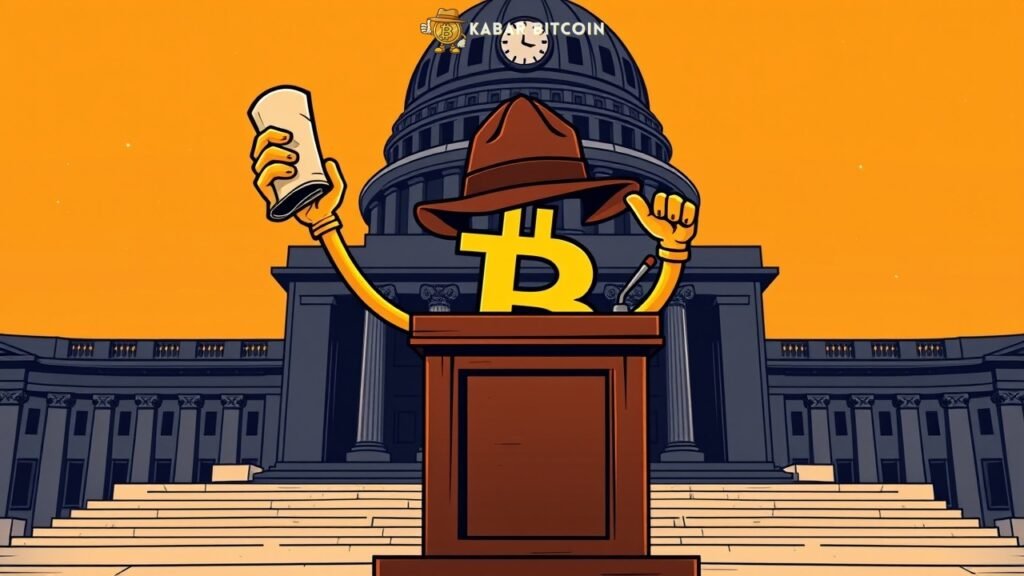





A group named Crypto Watchdog has flooded Washington DC with television and social media ads ahead of the final week before the US Senate’s summer recess. The campaign links crypto to terrorists, drug cartels, and scams targeting the elderly.
This move comes just as the fate of the CLARITY Act is being decided. The bill still needs 60 votes of support in the Senate, which is set to adjourn for recess this coming Friday.
Behind this ad blitz stands Chapin Fay as Executive Director. He is a media strategist who was previously mostly involved in Republican political campaigns, with no track record of involvement in the crypto world. Through this campaign, he champions a mission claimed to bring full transparency to the $2 trillion industry.
The Irony of Transparency Demands
One notable aspect of this campaign is not just its narrative, but who is paying for it. Crypto Watchdog loudly demands that the crypto industry be transparent, yet they themselves refuse to reveal the identities of the funders behind the advertisements.
A similar pattern is not only used by the anti-crypto camp in Washington. The Cedar Innovation Foundation, a pro-crypto group holding millions of dollars in funds, has taken a similar approach. They operate and exert influence without ever disclosing where their money comes from.
To further ramp up the pressure ahead of the vote, Crypto Watchdog brought in the results of a June survey of 1,000 voters. The figures show that 65% of respondents admitted to having a high level of distrust toward crypto. This poll is being used as ammunition to urge senators to block the bill’s passage.
What is Hindering This Bill?
Beyond the onslaught from mysterious advertising groups, the draft CLARITY Act remains gridlocked. The main remaining obstacle is the debate surrounding proposed ethical restrictions for senior government officials. This clause is closely guarded by Democratic politicians, who drafted it with the shadow of Trump in mind.
Sharp opposition also comes directly from the banking lobby. Bankers point to the rules regarding stablecoin reward programs included in the draft. According to the banking industry, the crypto incentive model too closely resembles the interest system of conventional deposits.
From the industry side, the pressure is pointing in the opposite direction. CEO Coinbase Brian Armstrong reiterated his view that the United States needs the CLARITY Act. In a statement shared by the WatcherGuru account that garnered 1,764 likes, Armstrong equated the stakes: economic security is national security.
This Friday, Senate members must make a decision before they pack up for recess. Their choice is not just about approving new rules, but about weighing the push from an industry seeking clear rules of the game against the pressure of attack campaigns whose funding sources refuse to step out of the shadows.
Reported from CoinDesk.
Disclaimer: This article is for informational and educational purposes only, not financial advice. Cryptocurrency assets are highly volatile and carry significant risk. Always do your own research (DYOR) and never invest more than you can afford to lose.