


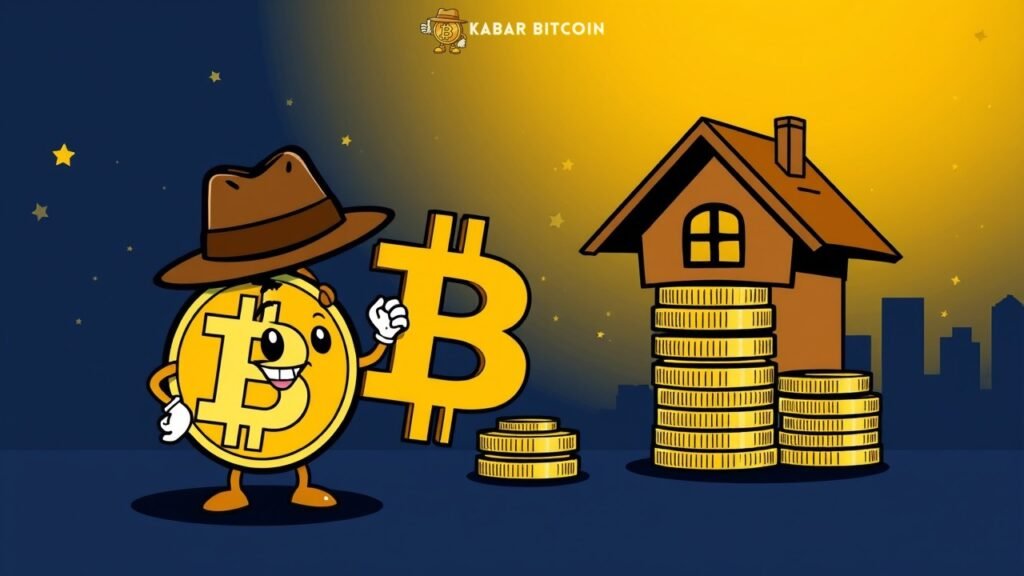

The price of a typical home in the United States has increased by more than $100,000 since 2020, according to data from Fidelity Digital Assets - a figure usually celebrated as a sign of growing homeowner wealth. But reprice that same home in Bitcoin, and the narrative flips entirely: a property that required more than 50 BTC in 2020 can now be bought for just 5 BTC - a 90% drop.
Not Rising Home Prices, But Currency Debasement
“What appears to be a rise in home prices is actually better described as the erosion of fiat currency value. The issue lies in the unit of account, not the asset,” said Zack Wainwright, digital assets research analyst at Fidelity. For decades, continuous monetary expansion has fueled inflation that has remained above the Fed’s 2% target for more than five years, eroding the dollar’s value. Bitcoin, with its fixed supply of 21 million coins and transparent issuance schedule, serves as a neutral benchmark that reveals this erosion - though a similar effect would also be visible if home prices were measured against gold or the Nasdaq stock index.
Challenges Still Facing Bitcoin’s Appeal
This argument comes at a time when Bitcoin’s price itself is under pressure, having dropped by half from its peak in October last year to around $63,000. Its short-term recovery depends on the return of institutional interest via ETFs, particularly BlackRock’s IBIT, which this week finally recorded inflows of over $200 million following a prolonged streak of outflows. On the other hand, 10-year US Treasury real yields (TIPS) climbed to 2.30% - the highest level since January 2025 - meaning investors can now earn positive yields even after accounting for inflation. This raises the opportunity cost of holding non-yielding assets like gold and Bitcoin, serving as a reminder that the “Bitcoin as a store of value” thesis must still compete with interest rates that remain far from low.
Reported by CoinDesk.
Disclaimer: This article is for informational and educational purposes only, not financial advice. Cryptocurrency assets are highly volatile and carry significant risk. Always do your own research (DYOR) and never invest more than you can afford to lose.