



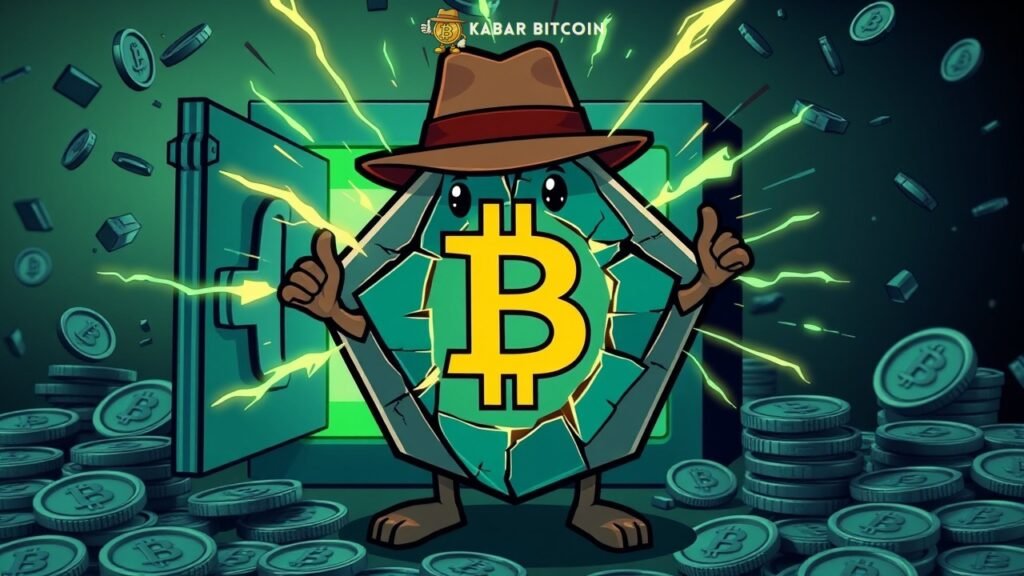

South Korea’s largest GameFi network has suffered another breach. Ownership of the WEMIX token contract fell into unauthorized hands, who immediately exploited the loophole to mint 5.22 million illegal WEMIX tokens. Beyond minting new tokens out of thin air, the attacker also used their administrative access to drain USDC liquidity reserves from the protocol.
A trending lead report on crypto exchange Bitget confirmed the smart contract hijack with a warning: “WEMIX Contract Ownership Compromised, 5.22M Tokens Illegally Minted.” With an influx of 5.22 million newly minted tokens entering free circulation, WEMIX market prices are likely to face severe selling pressure due to the threat of sudden liquidation. However, the compromise of the main contract and the illegal minting of millions of coins was not an isolated blow today.
A String of Breaches in Wemade’s Fortress
This hijacking incident is merely one in a series of consecutive exploits hitting the WEMIX ecosystem. Before the main token contract was compromised, the attacker had already breached the network’s stablecoin contract, WEMIX$, on July 27.
The hacker’s modus operandi in recent days was nearly identical to this main token exploit. In the first attack, the perpetrator minted 5.2 million counterfeit WEMIX$ tokens before draining $724,000 in USDC reserves. The fact that the attacker could repeat the exact same attack method across two different token contracts within days highlights how lax smart contract governance security is in this ecosystem.
Wemade, the developer behind the WEMIX project, is one of South Korea’s largest blockchain gaming pioneers and should have multi-layered security protocols in place. Unfortunately, the company has a vulnerable security track record. In December 2022, it also suffered a large-scale hack resulting in the loss of $80 million in assets.
What This Means for the Korean GameFi Market
The series of security breaches hitting the WEMIX ecosystem paints a troubling picture for the reliability of contract governance in Asian GameFi projects. When ownership of a smart contract can be transferred entirely to an outside entity, all promises of decentralization and code-level defenses inevitably collapse.
For retail token holders, the illegal minting of millions of tokens that could potentially be dumped on exchanges always results in instant asset devaluation. This is the tangible risk of allocating capital to projects with weak contract governance. When developers fail to safeguard access rights to their own vaults, it is ultimately the investors buying coins on the open market who bear the brunt of the losses.
Reported via Bitget.
Read also: What Is an NFT and How Does It Work?
Disclaimer: This article is for informational and educational purposes only, not financial advice. Cryptocurrency assets are highly volatile and carry significant risk. Always do your own research (DYOR) and never invest more than you can afford to lose.