
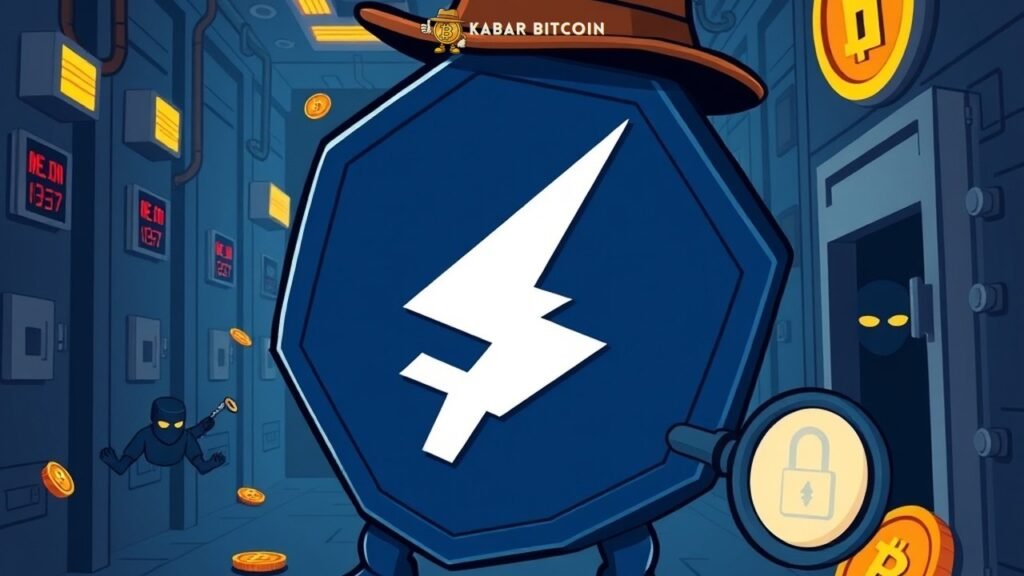

Bitcoin Core updated its security disclosure policy on October 22, 2026. Under the new guidelines, bugs categorized as easily rediscoverable - including those detectable through simple prompts to AI or large language models (LLMs) - will be disclosed much faster. Patches will be rolled out across all supported versions concurrently with public advisory reports.
Developer Antoine Poinsot noted an increasing number of vulnerability reports that are easily rediscoverable by external parties. The proliferation of LLMs has lowered technical barriers to spotting code weaknesses or identifying patches that developers attempted to keep discreet prior to official disclosure.
This update transforms how the community manages the delay between patch releases and public announcements.
Why Vulnerability Details Are Disclosed Sooner
Before the new policy took effect, an embargo system could delay patch releases for operators running older yet still supported node versions. The revised policy shortens that lag, ensuring fixes are available immediately without waiting for embargo periods to expire.
Classifying a bug as easily discoverable does not mean it is low severity. A vulnerability can be simple to uncover while posing a critical threat to the network. Under the updated policy, patches for all supported versions will be issued simultaneously with public advisories.
No specific vulnerabilities were announced in tandem with this policy shift. The newly released document outlines disclosure schedules and procedures for future bugs.
Different Schedules for Standard Bugs
For standard bugs outside the easily discoverable category, the previous timeline remains in effect. Low-severity vulnerabilities will still be disclosed two weeks after the major release containing the patch.
Medium- and high-severity flaws follow a longer timeline. Their technical details are only shared publicly two weeks after the last affected version reaches end-of-life, or approximately one year after the fix is released. Meanwhile, critical flaws fall outside the standard schedule and are addressed on a case-by-case basis.
Consequences for Node Operators
Bitcoin Core software does not automatically update. Node operators, including crypto exchanges, custody providers, and transaction services, decide for themselves when to deploy updates on their servers.
For node operators, this policy necessitates quicker turnaround times. The window between patch availability and public disclosure of technical details has narrowed significantly for certain bug categories. Delaying patch deployment on supported versions leaves systems exposed to vulnerabilities that are already public knowledge.
Reported via crypto.news.
Read also: What Is Bitcoin Halving?
Read also: Musk Backs Tesla-SpaceX Merger Plan - Fate of 30,221 Bitcoin Rests with Shareholders
Disclaimer: This article is for informational and educational purposes only, not financial advice. Cryptocurrency assets are highly volatile and carry significant risk. Always do your own research (DYOR) and never invest more than you can afford to lose.