




Efforts to trace and recover funds from the Bitget crypto exchange hack have ground to a near-total halt. Out of the $388 million stolen in the massive breach, cross-border authorities and Bitget management have only managed to freeze $1.1 million in assets.
That final tally means the joint investigative team was only able to salvage less than 0.3% of the total lost customer assets. The meager recovery rate highlights a fundamental vulnerability in the crypto ecosystem: the operational pace of official institutions consistently lags behind onchain privacy technology.
Trail Lost in Private Channels
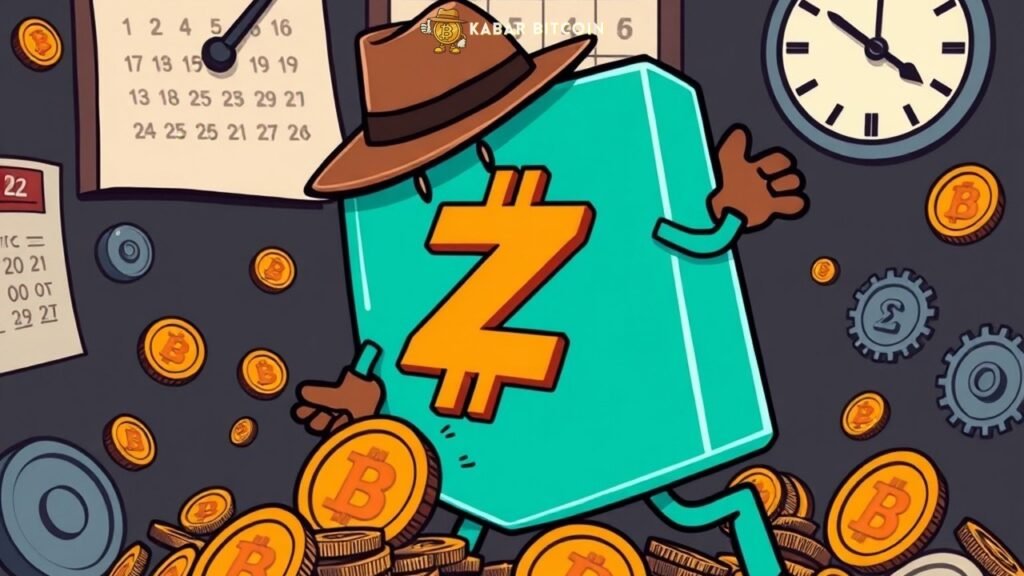
The remaining stolen funds vanished from public surveillance shortly after the attacker breached the exchange’s defenses. Further investigation confirmed that the hacker moved the majority of the stolen Bitget assets through shielded transactions on the Zcash network.
Zcash’s architecture utilizes private pools designed to make transaction histories unreadable - by both public observers and legal investigators. The hacker then fragmented the coin flows through THORChain, a cross-chain liquidity network that frequently facilitates asset transfers between blockchains without requiring user verification.
Through this multi-layered coin-mixing strategy, onchain tracking tools were forced to confront cryptographic systems that conceal sender and recipient information. By the time authorities were drafting coordination requests to send wallet-freezing notices to other exchanges, the hacker had long completed the asset swaps and routed them into anonymous networks.
The Limits of Law Enforcement
Given the scale of the lost capital, the Bitget incident officially ranks among the largest crypto exchange hacks of 2026. The loss of $388 million from a major global trading platform shatters the assumption that large-scale exchanges can always cut off an attacker’s escape route.
Field evidence underscores that onchain privacy innovations are advancing far faster than conventional jurisdictional frameworks. Once a perpetrator successfully channels stolen proceeds into pure privacy-preserving ecosystems - such as Zcash’s core features - legal mechanisms for seizing assets are immediately cut off.
Cross-border freezing mechanisms have proven far too slow to keep pace with the speed of crypto transfers. For industry participants, that 0.3% figure serves as a stark warning that building internal prevention systems is always cheaper than hunting down attackers after the funds have already changed hands.
Reported by qz.com.
Previously: Zcash Drops 21% After $30M ETF Outflow - and Bitget Stolen Funds Go Dark
Disclaimer: This article is for informational and educational purposes only, not financial advice. Cryptocurrency assets are highly volatile and carry significant risk. Always do your own research (DYOR) and never invest more than you can afford to lose.