



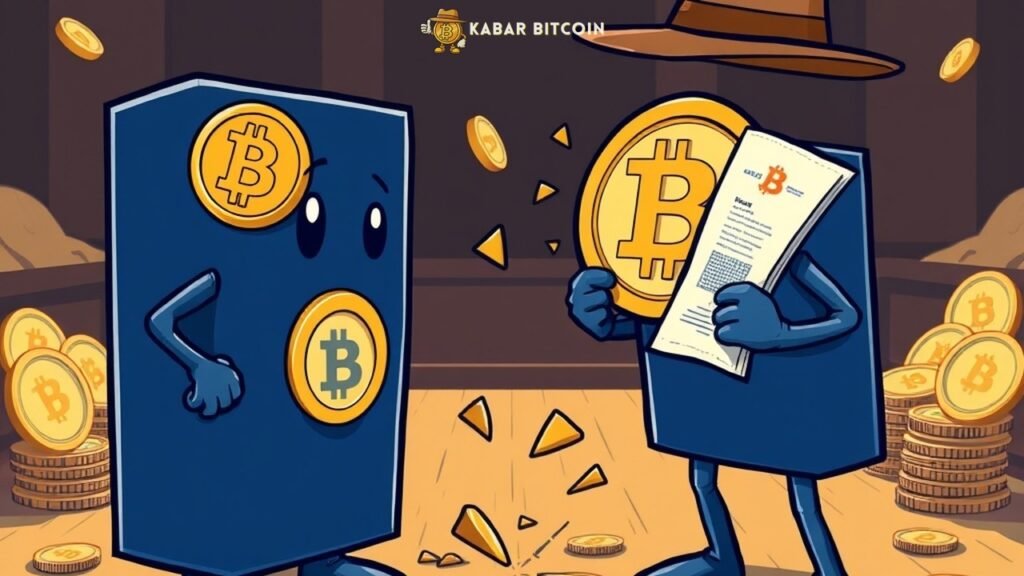

Robinhood Chief Legal Officer Dan Gallagher promptly rejected AMC Entertainment CEO Adam Aron’s request to halt AMC stock tokens. Gallagher went so far as to challenge AMC to send their lawyers immediately if they wished to dispute the matter. This firm stance received full backing from Robinhood CEO Vlad Tenev just minutes after the exchange heated up.
Data from RWA.xyz as of September 4 reveals that Robinhood currently manages 189 Stock Token products with a total value of $103.2 million. This figure represents a fraction of the broader tokenized stock market across various platforms, which now stands at $2.91 billion following a 17.5% gain over the past 30 days.
However, the dispute has escalated into a regulatory test due to the contentious structure of these tracking assets.
Synthetic Markets Without Ownership Rights
Aron called Robinhood’s token product improper, emphasizing that AMC never granted approval or participated in its launch. He argued that Robinhood is merely creating synthetic markets through a corporate entity based in the offshore jurisdiction of Jersey, well beyond the reach of US regulation.
According to its official terms, the token is structured as a debt security issued by Robinhood Assets (Jersey) Limited, rather than actual shares of the underlying company. Each circulating ERC-20 token relies on a Chainlink data feed solely to broadcast reference prices onchain. Token holders do not possess voting rights, ownership equity, or any other shareholder privileges attached to common stock.
Testing the SEC’s Regulatory Boundaries
RedStone co-founder Marcin Kaźmierczak predicted that the clash between AMC and Robinhood will accelerate the development of a concrete US securities regulatory framework. He emphasized that the core issue is not the concept of tokenization itself, but rather Robinhood wrapping public company shares into unregistered offshore derivatives without the underlying firm’s consent.
Robinhood’s Stock Token products are explicitly unregistered under the US Securities Act, barring them from being offered to US citizens. Divisions within the SEC have previously drawn formal distinctions between issuer-sponsored tokenized securities and third-party products. This jurisdictional dispute serves as an immediate testing ground for those dividing lines.
For retail investors, this corporate showdown highlights a critical technical reality: holding a price-tracking token is not equivalent to owning legal shares in a company.
Reported by crypto.news.
Disclaimer: This article is for informational and educational purposes only, not financial advice. Cryptocurrency assets are highly volatile and carry significant risk. Always do your own research (DYOR) and never invest more than you can afford to lose.