




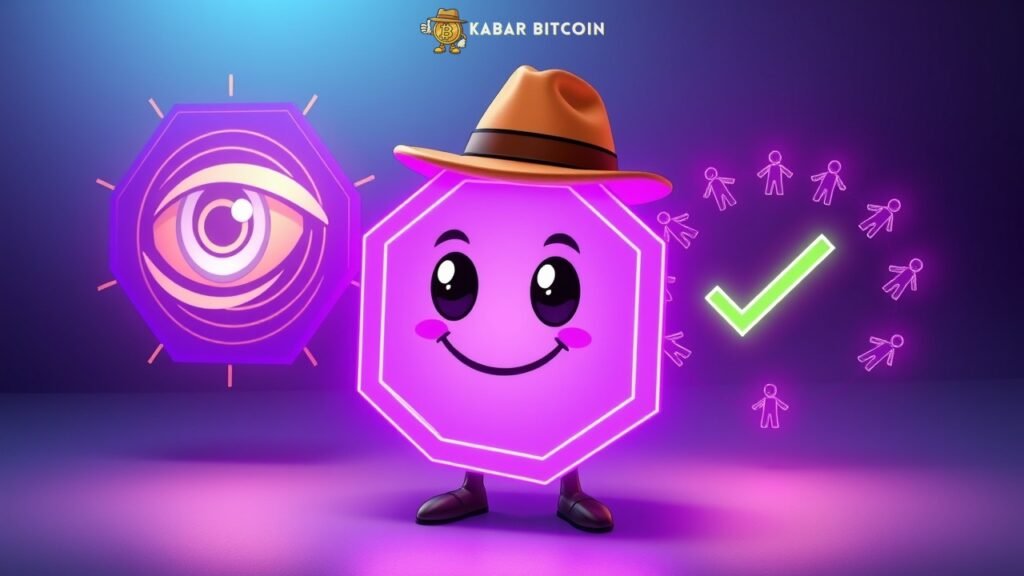

As the internet becomes increasingly flooded with bots and AI-generated content, a simple question has turned into a multi-billion-dollar battleground: how do you prove that you are truly human? Two crypto projects - Worldcoin and Pi Network - both claim to have verified around 18 million humans using contrasting methods, all competing for the same prize: becoming the identity layer of the future internet.
Two Different Paths, One Goal
Worldcoin, a project spearheaded by OpenAI chief Sam Altman, chose a hard biometric approach: scanning users’ irises using a spherical silver device called the Orb. With a single scan, a user receives a “World ID” - cryptographic proof that they are a unique human without revealing their identity. While precise, this approach has sparked controversy regarding privacy and massive-scale biometric data collection.
Pi Network took a vastly different route. Rather than scanning bodies, the project built its user base through a mobile app that allows people to “mine” Pi tokens simply by pressing a button each day, subsequently verifying identities through a KYC process and peer-to-peer trust networks. The model is more approachable and viral - especially in developing nations, including Indonesia, which is home to one of the world’s largest Pi pioneer bases - yet it faces persistent criticism over whether it can guarantee each account truly represents a single real human.
Why There Is No Winner Yet
Despite impressive verification figures on both sides, neither can claim victory. Worldcoin has moved fast technologically but has run into regulatory roadblocks across multiple countries questioning the legality of iris collection. Pi Network boasts high numbers and community loyalty, yet remains dogged by skepticism over transparency and the ecosystem’s actual maturity after years of development. Both, in other words, have 18 million reasons for optimism - and roughly as many reasons for doubt.
The Stakes Go Far Beyond Coin Prices
What is truly at stake is not token prices, but the position of becoming the internet’s “digital passport.” If AI makes it increasingly difficult to distinguish humans from machines, a system that reliably proves “this is a real human” will be immensely valuable - serving everything from logins, voting, and aid distribution to filtering out bots on social media. Whoever wins trust at this layer could hold one of the most fundamental pieces of infrastructure for the next web.
 📌 Baca JugaEks-Partner Hack VC Ditemukan Meninggal di Jalan Raya - Sempat Ancam Bongkar Bukti Perlakuan Buruk Perusahaan
For now, the race is more of a marathon than a sprint. Worldcoin is betting on biometric certainty, Pi Network on the strength of human networks - and ultimately, the public will decide which model is worthy of guarding their identity gateway.
Reported via crypto.news.
Disclaimer: This article is for informational and educational purposes only, not financial advice. Cryptocurrency assets are highly volatile and carry significant risk. Always do your own research (DYOR) and never invest more than you can afford to lose.