



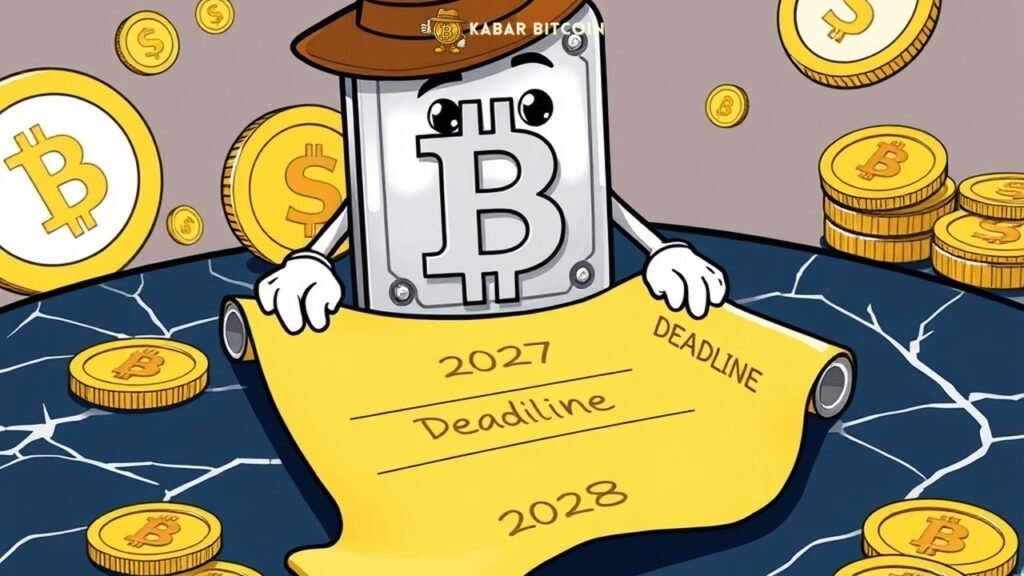

The US Department of the Treasury (Treasury) has proposed new implementing regulations defining the criteria for stablecoins allowed to be issued and sold within its jurisdiction. This technical proposal serves as the operational framework for the GENIUS Act, a digital asset regulation signed into law by President Trump in July 2025.
The implementation phase is divided into two deadlines. Starting January 18, 2027, stablecoin issuers must hold official licenses at both the federal and state levels. Treasury Secretary Scott Bessent stated that these regulations are designed to reinforce the role of the US dollar as the world’s reserve currency.
Multi-Tiered Bans for Crypto Platforms
The strictest consequences will take effect a year later. Starting July 18, 2028, crypto exchanges and digital asset platforms will be prohibited from selling stablecoins to US customers unless the tokens are produced by a party with authorized issuer status. Platforms are still permitted to distribute foreign stablecoins, provided the foreign issuer complies with all US legal mandates and is subject to bilateral agreements between countries.
The Treasury is firmly closing marketing grey areas. The list of violations is clearly outlined: platforms are prohibited from directly offering transactions to US buyers or simply advertising the availability of tokens in the country. Approving sales to self-solicited US users who request access is also counted as a violation. Platforms caught helping customers bypass geographical restrictions - for instance, by ignoring IP checks - are confirmed to be violating these rules.
Legal Pressure in the Secondary Market
The new proposal complements a series of bureaucratic hurdles established earlier. In February, the OCC released a draft framework for stablecoin issuance governance. Two months later, the FDIC followed with rules on reserve and capital requirements, coinciding with the Treasury’s circular regarding sanctions compliance and anti-money laundering (AML).
This long string of regulations recalls warnings previously voiced by several industry players. Paradigm and the Hyperliquid Policy Center had earlier highlighted the burden of obligations placed on creators. Requiring issuers to share responsibility for the circulation of stablecoins in secondary markets risks driving these innovators out of the decentralized finance (DeFi) ecosystem. The public has until October 19, 2026, or 60 days from its publication in the Federal Register, to submit comments on this draft. If the rules are finalized without revision, crypto exchanges will be left with only two choices: reject local clients’ funds or prepare to face law enforcement.
As reported by Decrypt.
Read also: What is DeFi (Decentralized Finance)?
Disclaimer: This article is for informational and educational purposes only, not financial advice. Cryptocurrency assets are highly volatile and carry significant risk. Always do your own research (DYOR) and never invest more than you can afford to lose.