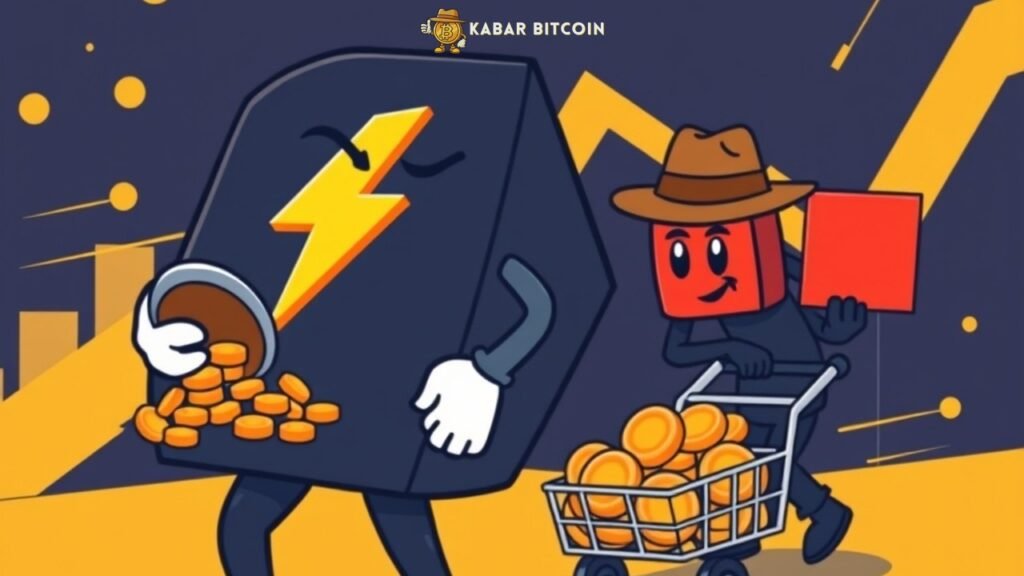






The official Bitcoin network split in two last weekend. Right at block 961,632 on Saturday, August 8, 2026, a chain split occurred as Bitcoin Improvement Proposal 110 (BIP-110) entered its mandatory signaling phase. This proposal introduces a specific rule: a total ban on storing non-financial data, such as images and text, inside Bitcoin transactions for the next year.
However, the new chain’s progress immediately stalled. While the main Bitcoin chain continued without issues up to block 961,721, the BIP-110 chain remains stuck at block 961,633. As of 10:19 UTC on Sunday, August 9, 2026, this minority chain had spent 12 full hours without producing a single new block. The gap between the two networks has now widened to 88 blocks.
Hitting the Difficulty Wall
The stagnation of the BIP-110 chain stems from blockchain mathematical rules. This new chain inherited the full mining difficulty of the original Bitcoin network, but has to solve it with minimal computing power or hashpower. Due to this imbalance, the process of finding new blocks has stretched to take hours.
The work on the first two blocks of the BIP-110 chain was completed by a pseudonymous miner group named Roughnecks. This group utilized the Ocean DATUM mining protocol to process transactions. The lack of computing power on this new chain corresponds directly to its lack of support from the beginning. Out of the previous 2,016 blocks, only 51 blocks - equivalent to 2.53% - signaled approval. This figure is far below the 55% threshold that is the standard for the normal activation of a proposal.
The combination of low hashpower and high difficulty creates a long waiting cycle. Based on current speed estimations, the BIP-110 chain needs 350 days just to complete the 2,016 blocks required for a new difficulty adjustment cycle. This figure contrasts sharply with the main Bitcoin chain, which is capable of completing the same path in 14 days. Beyond technical matters, this proposal faced open opposition from MicroStrategy chief Michael Saylor and Blockstream CEO Adam Back, both of whom declared their opposition to BIP-110.
Threats to Forked Coin Transactions
The starting point of this network split occurred when AntPool processed the first non-signaling block. The main network accepted the block, but BIP-110 nodes rejected it. The mandatory signaling window itself still has room to run, as it will continue until block 963,647 is reached.
Behind the miners’ deadlock, there is a real danger for users. Because both chains still accept the same transaction format, selling or moving the new forked coins carries the risk of a replay attack. An outgoing transaction on the BIP-110 chain can be copied and replayed on the main chain. The intention to sell new coins actually runs the risk of exposing users’ original BTC assets.
The stalling of this minority chain serves as proof of the limits of trying to change a network without real computing power backing it. Reported by Cointelegraph.
Read also: What Is Bitcoin Halving?
Disclaimer: This article is for informational and educational purposes only, not financial advice. Cryptocurrency assets are highly volatile and carry significant risk. Always do your own research (DYOR) and never invest more than you can afford to lose.